
Palace of Light (opening excerpt)
It is known to all who speak of it as a Palace of Light. The light comes through daily in sparkling shimmers. Discussions of clouds are impolite. Framed close up in the air, the leaves of trees clump together beneath each new sonic boom, another jet’s arrival.
Everyone who knows of it wants to come to the Palace of Light. Many never want to leave. Some who stay can be seen at distances, on the side of hills, between houses, fading blanched into a crisp white brightness.
In the Palace of Light, some people huddle in corners, out of the light, watching arrays of color flash and writhe on flat surfaces formerly blank, which even outside the light can grow hot to the touch.
In the Palace of Light, every surface holds out the possibility of touch, the possibility of being seen clearly, without shadow. Yet every object throws the shadow of itself onto some other object.
In the Palace of Light, faces look searchingly into shadows. Signs in the Palace of Light read “Encourage Your Own Suspicions.” The breeding grounds of darkness have to be examined, poked, prodded.
One can leave the Palace of Light for weeks, months, years, and know it will still be shining. If you return, will the brightness after all that time fill you with its glow or burn the skin to a flaking sore?
The Palace of Light has no clocks and does not announce that time exists. A looped soundtrack pipes through its speakers and is changed to mark seasons and celebrations that rotate without suggesting the forward momentum of time. Everything that happens is always happening again. On a circle, everyone still has to stand somewhere.
The Palace of Light accepts all forms of praise. In the Palace of Light, nothing is too good.
In the Palace of Light, hiding happens inside: rooms, boxes, the head and chest, the eyes. Wheels and highways rest within other wheels, other highways.
And where there are no words, there shines always a glare it is possible to stand in.
In the Palace of Light, salespeople of light move through corridors deftly, calling out their sales pitches, offering new twists and old dependabilities and half-formed gimmicks. “This light will be the best light ever,” they say. The Palace of Light is built from a little known and much misunderstood history of sales of light.
The Palace of Light has sometimes been a battlefield but more often sells light to battlefields far away.
Speakers in the Palace of Light boom storming music on Halloween, with lots of screaming and dark pounding beats to which people dance, laughing behind their masks.
The Palace of Light remains always open to the possibility of your middle class future.
The Palace of Light promises to flash ever more brightly in your declining years.
The Palace of Lights sits on once-contested land, the terms of the contests written on words hidden in vaults for which decoders need to find the right key. Now and then, the terms are intoned.
Repeat after me: I am the Palace of Light, and all who come here carry on them the marks they have made on me.
It has to look good to live long in the Palace of Light.
In the Palace of Light, people take long lazy mornings and long lazy afternoons and long lazy evenings, at least in their minds, when in fact they are often working long hours, and sometimes when not working they are still working, they are still actually working.
In the Palace of Light, many kinds of surfaces show themselves to each other and a lot is happening on the surfaces. But under the surfaces, what is happening, is there anything happening under the surfaces?
In the Palace of Light, shrubbery hangs in neat rows on the sides of rock walls.
In the Palace of Light, people walk along the streets, passing each other with wary nods or friendly hellos, always measuring, often milling, always calculating what it takes not to be grabbed by the ankles and pulled into sewers where the clang of machinery signals the sweaty work which keeps the Palace of Light floating on pockets and corridors of air.
The Palace of Light will wink at you.
In the Palace of Light, no one discovers the limits of language.
The perpetual loop soundtrack of the Palace of Light plays back to it the softer famous songs of its own past, reminders of how it never really was, then, but how it wanted to be and still does.
In the Palace of Light, one face often tries to imitate the expressions of another face, never quite succeeding, smiling when it comes close, and always holding tightly to the absence it keeps secretly in a place that might poke through a spot in the back of its head.
How I long for you in the Palace of Light and always will, never once considering whether I ever knew you.
The Palace of Light has a plaque stating that in it, a revolution had once been plotted but never came to pass.
From a door, the Palace of Light opens onto a wide strip of sand beyond which waves flash with a deep monotonous hum through which people walk as if suspended in silence. From another door, one that only a few walk through, the adventurous find a desert of red and golden rocks.
In the Palace of Light, people believe whatever they want as long as they believe in the Palace of Light.
Some of us went so long without the Palace of Light that you can’t expect us to leave, now that we’re here.
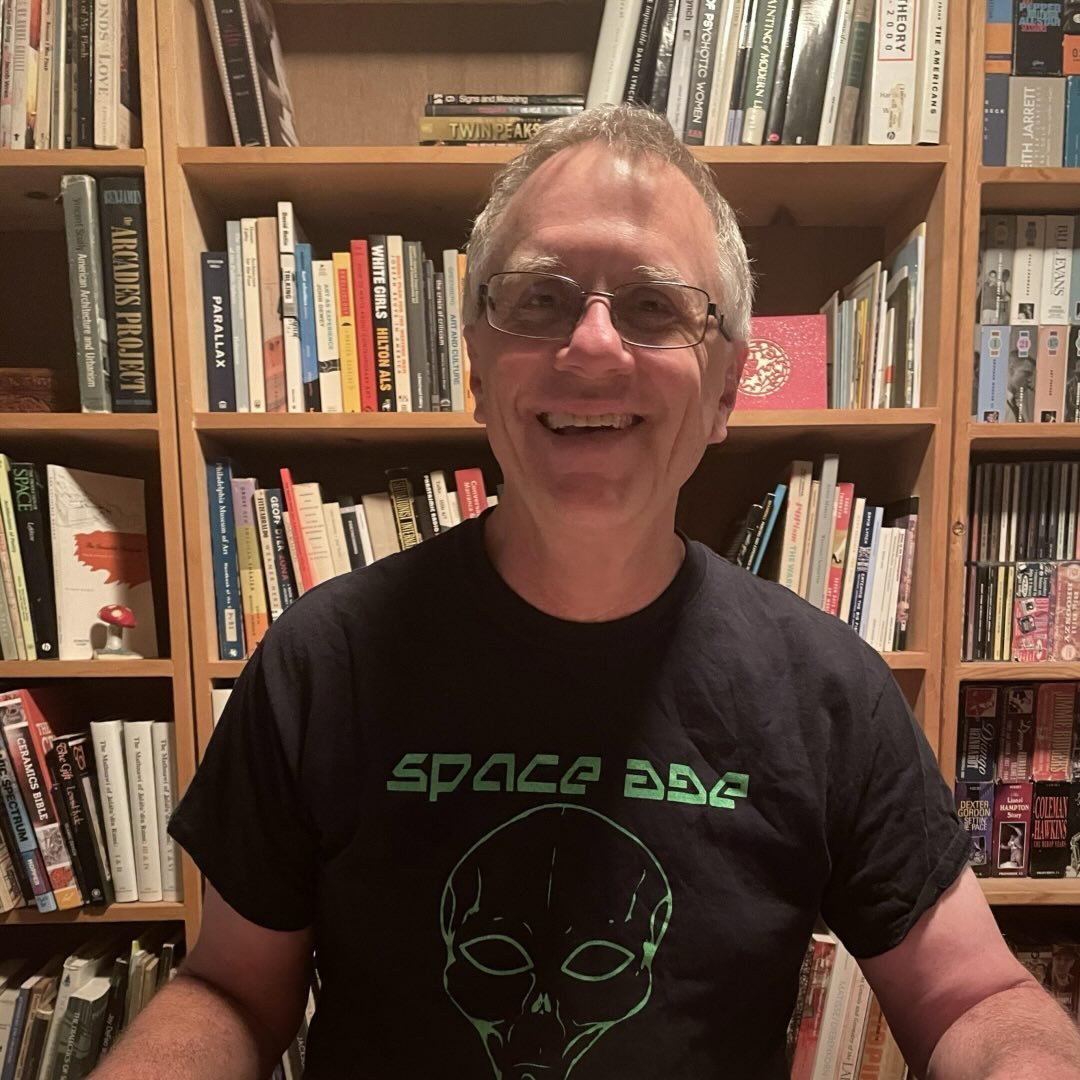
Mark Wallace is the author of more than 20 books and chapbooks of poetry, fiction, and essays. Selections from his multi-book long poem The End of America have been published in a variety of formats over the last two decades. His most recent book is a play, The Rapture, co-authored with James Sherry. Other recent publications include a novel, Crab, and a book-length prose poem, Notes from the Center on Public Policy. He lives and works in San Diego, California.